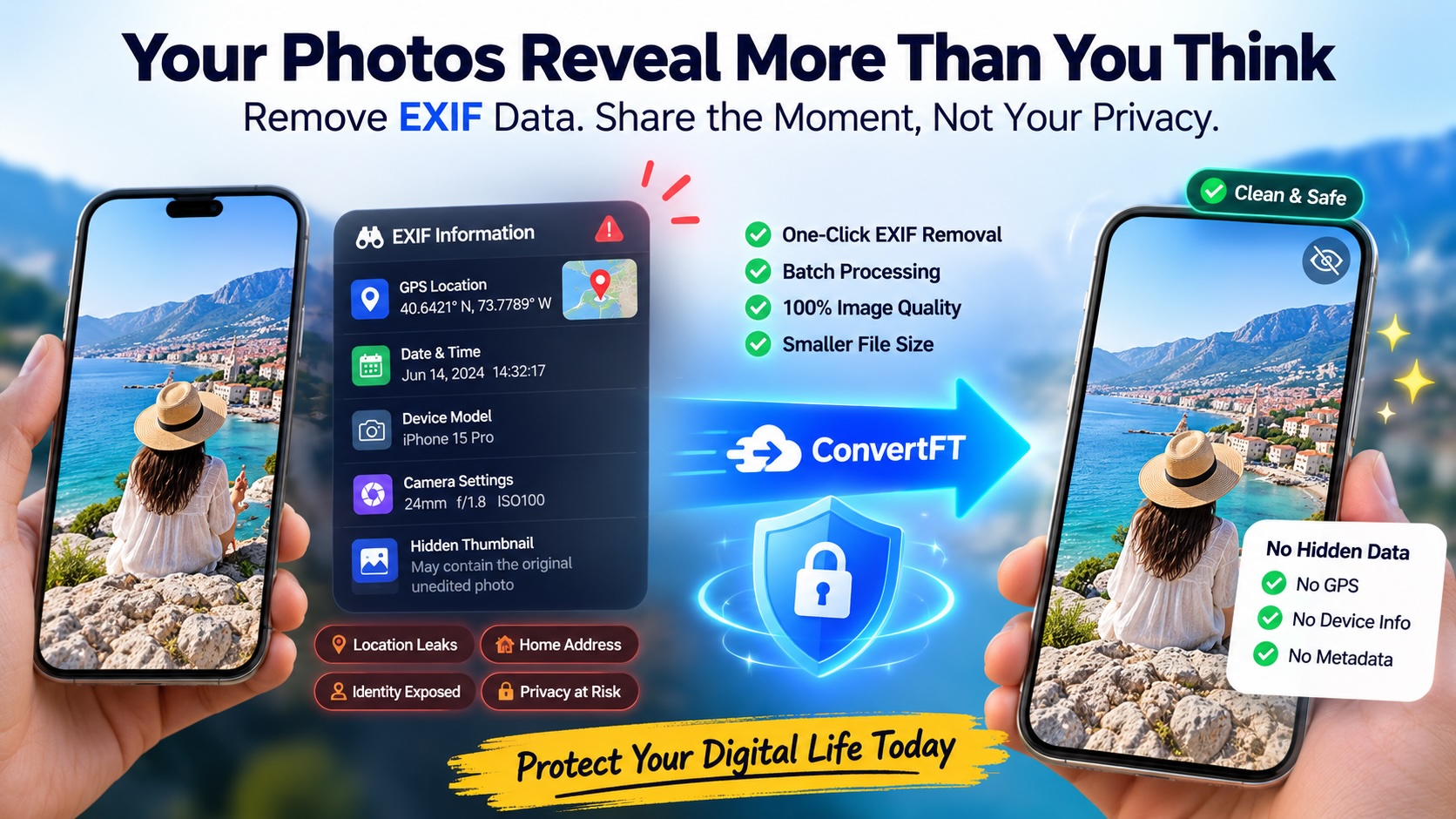
Overview: The Invisible Side of Sharing
When you click "Post" on social media or an online forum, you are sharing much more than just a picture. Every photo captured by a smartphone or professional camera contains a hidden treasure trove of information known as EXIF (Exchangeable Image File Format).
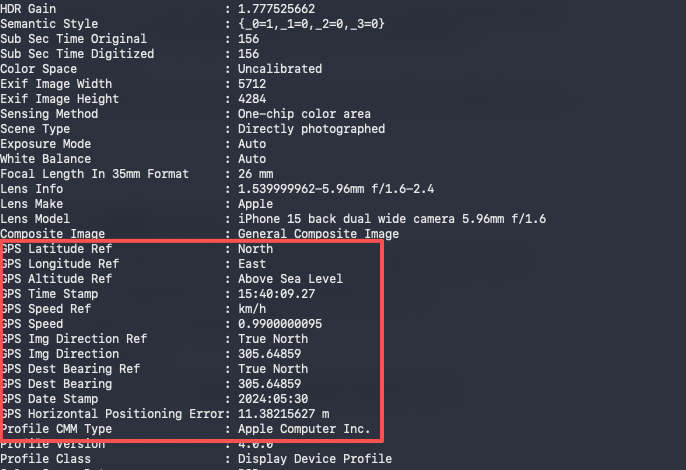
For a casual user, it’s a digital record; for a malicious actor, it’s a roadmap into your private life.
1. What is EXIF Data? What Are You Hiding?
Think of EXIF data as a "digital fingerprint" embedded in your photo. The moment you press the shutter, your device automatically injects sensitive details into the file:
- Precise GPS Coordinates: Your exact longitude and latitude—often accurate enough to pinpoint your home balcony.
- Device Identity: Your phone model, camera serial number, and even firmware versions.
- Timestamp Precision: The exact date and second the photo was taken.
- The Thumbnail Trap: Even if you crop a photo to hide something, the embedded EXIF thumbnail might still contain the full, unedited original image.
Learn more about the risks of hidden metadata here: convertft.com/blogs/hidden-privacy-information-in-your-photos
2. Real-World Risks: Why Privacy Scrubbing is Critical
- Online Marketplaces (eBay/Facebook): Selling a used item from home? Buyers can extract your home address from the product photo.
- Remote Work: Sharing a "deskie" (desk photo) might inadvertently reveal your company’s internal network info or your precise location to competitors.
- Format Conversion Flaws: Most basic converters leave EXIF data intact when switching from HEIC to JPEG. ConvertFT, however, is designed to strip this data by default, ensuring your privacy remains locked.
3. Why Built-in "Privacy Settings" Aren't Enough
While brands like Apple or Samsung offer "Remove Location" toggles, they often fall short:
- Incomplete Cleaning: They might remove GPS but leave the device serial number and technical metadata behind.
- Platform Limits: These settings only work within the mobile app. If you transfer photos via PC or web, the data often "zombies" back to life.
- Zero Batch Support: Manually toggling privacy for 100+ photos is a nightmare. ConvertFT solves this with a one-click batch engine.
4. How to Deep-Clean Your Metadata with ConvertFT
ConvertFT isn't just a converter; it’s a high-performance privacy vault for your digital assets.
Step 1: Reveal the Hidden
Upload your photo to our tool. You’ll be shocked to see dozens of metadata points—from focal length to the exact city of origin—embedded in a single "innocent" shot.
Step 2: Military-Grade Batch Stripping
Need to upload a whole gallery? Manually cleaning is impossible.
- Simply toggle "Remove EXIF".
- Our backend re-encodes the image stream, physically overwriting the data sector rather than just hiding it.
Step 3: High-Speed Output
Powered by a distributed processing cluster, ConvertFT can scrub 100+ photos in seconds without altering the visual quality of your images.
5. Tech Talk: Does Removing EXIF Hurt Image Quality?
Short Answer: Absolutely not.
EXIF data lives in the Header of the file, while your visual pixels live in the Body. Removing metadata is like tearing the return address off an envelope—the letter inside remains untouched.
- Bonus: Stripping this redundant data actually shrinks your file size by 5KB - 50KB, giving you a "leaner" image without losing a single pixel.
Need Extra Protection? Try "Privacy Blur"
If your photo contains sensitive content (like faces, license plates, or documents), metadata removal is only the first step. ConvertFT’s Blur Tool allows you to adjust the blur intensity. The higher the value, the more the details are obscured, providing a total privacy shield for your visual content.
Conclusion: Share the Moment, Not the Data
We love to share our lives, but it shouldn't come at the cost of our security. Before your next upload, take 5 seconds to run your images through ConvertFT. It’s the simplest, most effective way to protect yourself and your family in the digital age.